
(A selection of works made in Photography -Analog Photography / Digital Photography- is shown to offer a global vision of the different produced series)


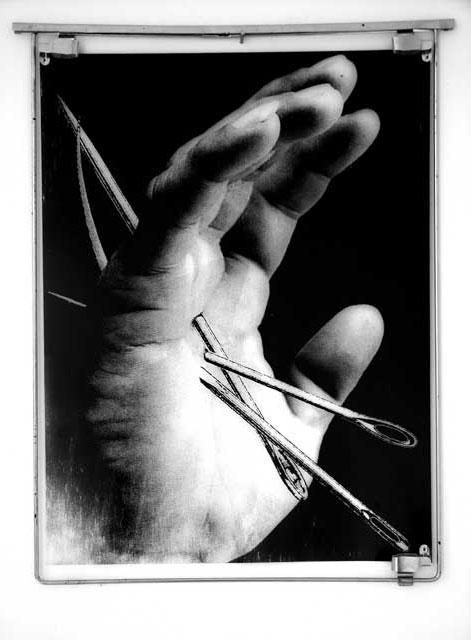


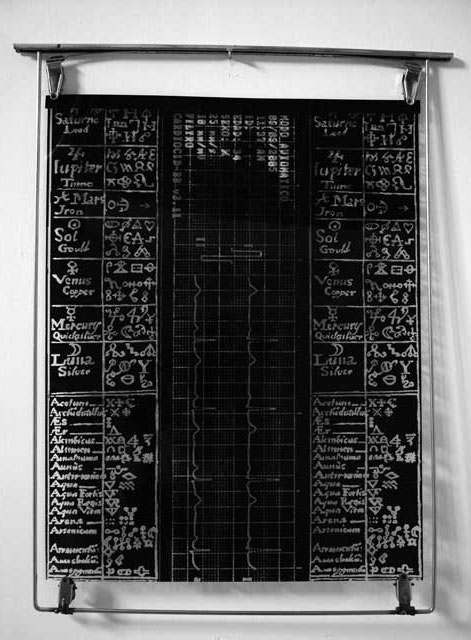


Photography has a decisive weight in the panorama of contemporary art and Ernesto Benitez is an artist who, from a very young age, has been interested in recreating realities other or misleading realities and has experimented with this means of expression. Benítez relies on the photographic image to veil his discourses, to load them with ambivalence (not ambiguity) and to introduce in his works certain doses of “encrypted” information (sometimes literally). In his most recent proposals, this artist turns to photography to engage in a dialogue about ubiquity, omnipresence or otherness and the self-referential.
Contemporary Photography
In his photography and in his entire proposal, Ernesto Benítez dusts off many symbols already coined and legitimated (although almost forgotten) by the Western tradition in order to confront them with the new archetypes and the liturgical paraphernalia of modernity. The artist proposes a constant tension of memory and photography is one of his best allies.
Contemporary Cuban Photography
Ernesto does not hide his gaze influenced by the German post-war Subjektive Fotografie. The break proposed by Subjektive Photografie with previous stereotypes inherited in the photographic field is for Ernesto, already in itself, a symbol of unsuspected scope in these times of apathy and excessive ludism. Of course, Ernesto strips himself of all the technicality of Subjective photography that influences him, but highlights and consciously tries to drink in the utopian and emancipatory flow that emanates from one of the photographic currents that best illustrates subjectivism, the aura of artistic autonomy and experimental spirit of modernity.
Ernesto Benítez is a conceptual artist who operates with antinomies and therefore is aware that his works (including photography) are hermetic despite the fact that they are presented with an “easy to read” appearance (mainly his drawings and two-dimensional works produced in the years 2000-2010). In his works Ernesto leaves no loose ends or ideas in the air. Nothing is casual in an aesthetic proposal like his, which is structured precisely from diverse discursive levels not explicitly revealed and that manifests through codes threaded with a symbolic discourse almost impenetrable from a mere instrumental reading, like the one that emanates from concrete thought at the crossroads of modernity. There are many hidden references in his work: references of anthropological, existential, political, or cultural order. The artist includes in his work many Historical references and other “hidden” philosophical data or assessments that are given to us only as symbolical references, visually transvestite.
Ernesto also incorporates into his works elements that he extracts from inexhaustible alchemical sources, from oriental thought and other cultural references that his anthropological studies have provided him with. In fact, his works include many personal data that would escape a quick epidermal reading. By carefully observing these works, we can find many personal references of a private nature that are offered to us, overlapping, in the context of the different discursive levels. In the case of photography these elements are offered or incorporated sometimes from the photographic autonomy itself and other times by means of photographic complements incorporated in his installations thought for specific spaces -site specific art-, his environmental artworks or, his new media proposal (new media art), as well as in the pieces made with traditional technique, materials and supports (paper, canvas, wood, gold, silver, diamonds, pearls, clay or diverse ashes, among others…)
Contemporary Photography and the Expansion of the Photographic Image
Contemporary photography has expanded the boundaries of the photographic medium through the exploration of different technologies, materials and image-making processes. Beyond the traditional function of recording or documenting reality, contemporary photography has become an open field of artistic experimentation in which the image can be constructed, manipulated, fragmented and transformed. Contemporary photographers investigate the relationship between light, time, perception and representation, exploring the possibilities of photographic language through diverse technical and conceptual approaches. Photography is no longer understood exclusively as the capture of an external reality, but also as a means of questioning how images are produced, interpreted and experienced.
Contemporary Analogue Photography and Material Experimentation
Contemporary analogue photography continues to explore the physical and chemical possibilities of photographic processes. Film photography, darkroom techniques, alternative photographic processes, experimental development, multiple exposure and manual interventions allow artists to investigate the material conditions of the image. Contemporary analogue photography can incorporate chemical alterations, unconventional printing methods, manipulation of negatives and direct interventions on photographic surfaces. Rather than treating analogue photography as a nostalgic return to traditional methods, these practices reconsider the photographic process as a space for experimentation, where unpredictability, material transformation and the physical trace of light become active elements in the construction of the image.
Contemporary Digital Photography and Image Manipulation
Contemporary digital photography has transformed the possibilities of image production through the use of digital cameras, computational processes and advanced image-editing technologies. Digital photography allows artists to investigate new relationships between capture, processing and visual construction, combining photographic records with digital manipulation, compositing, retouching and image reconstruction. Contemporary digital photography is not limited to reproducing what the camera records; it can question the distinction between photographic evidence and constructed representation. Through these processes, digital photographic art explores the flexibility of the image, its capacity for transformation and the changing conditions under which photographic reality is perceived.
Experimental Digital Photography and New Image-Making Processes
Experimental digital photography extends the medium through procedures that challenge conventional photographic techniques and established visual structures. Digital layering, image distortion, pixel manipulation, algorithmic processes, scanning, digital collage and the combination of photographic material with other media create possibilities that move beyond the traditional photographic image. Contemporary digital photography can incorporate fragments from different sources, alter spatial and temporal relationships or construct images that do not correspond to a single moment or viewpoint. These experimental approaches transform photography into a process of research in which technology is not merely a tool for producing images, but an active component of artistic exploration.
Photography, Mixed Media and the Transformation of the Image
Contemporary photographic art increasingly establishes relationships with other artistic disciplines, incorporating drawing, painting, printing, installation and physical intervention into photographic processes. Mixed media photography allows images to move between digital and analogue procedures, combining photographic prints with different materials, surfaces and forms of manipulation. The photographic image can become part of a larger structure, lose its conventional autonomy or acquire new physical dimensions through its interaction with other elements. These approaches expand the possibilities of contemporary photography and challenge the boundaries separating photographic creation from other forms of artistic expression.
Contemporary Photography as an Open Field of Artistic Research
Contemporary photography constitutes an evolving field of artistic research in which technological innovation, material experimentation and conceptual inquiry converge. Analogue photography, digital photography and hybrid photographic processes offer different possibilities for investigating the nature of images and their relationship with reality. The choice of camera, photographic process, printing method, software or material intervention is not simply a technical decision; it can determine the conceptual and visual development of the work. Contemporary photographic art therefore extends beyond the production of images, becoming a means of exploring perception, representation, memory, materiality and the conditions through which images acquire meaning.